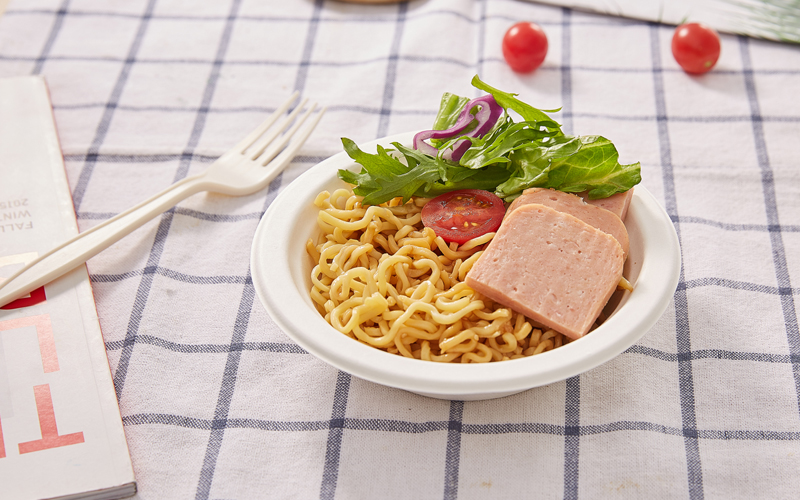
Compostable bagasse bowls help food brands cut plastic and win eco-minded customers with heat-tolerant, leak-resistant packaging that fits real kitchens and real delivery workflows
What Is Sugarcane Bagasse Bowl Packaging?


Bagasse is the fibrous by-product of sugarcane after juice extraction. Pressed with water and heat into molded fiber, it becomes sturdy, food-safe bowls and lids for hot or cold meals.
Material & Process
Bagasse fibers are pulped, formed in precision molds, then dried and trimmed. The result is a lightweight bowl with natural stiffness, good heat resistance, and reliable edge sealing.
End-of-Life & Sustainability
Unlike conventional plastic, bagasse bowls are plant-based and designed for composting where facilities exist. Even when composting access is limited, the material avoids fossil sourcing and reduces plastic dependency.
Why Choose Bagasse Bowls for Wholesale Programs


When you purchase at scale, you need performance, compliance, and supply assurance—not buzzwords.
Performance That Replaces Many Plastics
Heat-tolerant up to typical foodservice temperatures, bagasse bowls handle soups, noodles, rice dishes, salads, and reheats. The fiber surface reduces condensation, helping keep textures appealing during delivery.
Grease & Moisture Management
With right-fit formulations and optional plant-based barriers, bowls resist oil and broth for longer service windows, supporting delivery and meal-prep models.
Microwave & Oven Use
Short-cycle reheats are supported for many SKUs. Always confirm specific time/temperature guidelines with your supplier’s data sheet for each bowl/lid set.
Consumer-Visible Sustainability
Packaging that looks naturally fiber-based signals your brand values at first touch—no greenwashing jargon required.
Wholesale Specifications & Sizing Guide
Wholesale buyers typically standardize a core set for menu coverage and pallet efficiency.
Common Bowl Capacities
12–16 oz for sides and small mains; 24–32 oz for hearty bowls and noodles; 36–42 oz for salads and family dishes. Rims can be round or raised to improve lid grip in delivery stacks.
Lids & Fit
Choose matching bagasse, RPET, or PLA lids depending on clarity needs and heat profile. Tight tolerances around the rim minimize leaks during courier handling.
Use Cases by Channel
QSR & Fast Casual
One-hand carry, quick lidding, and stable stacking reduce line friction. Brandable lids or sleeves keep your look consistent across locations.
Meal Prep & Grocers
Cold-chain friendly and reheat-ready formats support weekly plans. Clear labeling zones simplify batch operations and date coding.
Catering & Events
Lightweight, space-efficient nesting cuts transport labor and waste volume on-site.
Quality, Safety & Certifications
Scaling responsibly means verifiable systems—not claims. Warmpack’s manufacturing site operates under recognized schemes such as BRCGS Global Standard for Packaging Materials (Issue 6, Grade A) and FSSC 22000 for food safety management. These frameworks cover hygiene controls, materials traceability, and continuous improvement across pulping, molding, drying, and die-cutting processes, helping enterprise buyers meet retailer and audit requirements.
Why Choose Warmpack
Process Control from Pulp to Pack
Integrated pulping, vacuum filtration molding, high-efficiency drying, and precision die-cutting deliver consistent rim geometry and lid fit—critical for leak control.
OEM/ODM Friendly
Custom rim profiles, embossing, and packaging artwork help unify brand identity across bowls, lids, trays, and clamshells.
Scale & Continuity
Stable raw-material pipelines and multi-line redundancy support seasonal spikes and promotional campaigns with firm lead times.
How to Evaluate a Bagasse Bowl Supplier
Fit & Function
Request lid-fit and drop-test videos; confirm grease resistance and heat-hold on your menu items, not just water tests.
Documentation
Ask for food-contact declarations, migration data where applicable, and current certificates under recognized standards.
Operational Proof
Pilot with courier partners and measure leak incidents, label adhesion, and customer feedback before nationwide rollout.
Ordering & Logistics
MOQ & Lead Times
Typical MOQs are aligned to mold sets and outer cartons. Forecast quarterly to lock fiber allocation and avoid last-minute surcharges.
Carton & Palletization
Right-sized inners reduce deformation during long hauls. Confirm outer dimensions against your DC racking and 40HQ/20GP load plans.
Branding Options
Embossed logos, print sleeves, or FSC-style messaging (where certified) can be added without slowing lines when planned early.
FAQ
Q: Are bagasse bowls truly compostable?
A: They are designed for composting in industrial facilities where available. Check local access and regulations in your markets.
Q: Can they handle oily dishes or soups?
A: Yes. Select SKUs with higher grease resistance and pair with matching lids; validate with your own recipes and hold times.
Q: Are they microwave-safe?
A: Short reheats are generally supported. Confirm each SKU’s time/temperature guidance and avoid empty or high-fat dry heating.
Q: Will bowls deform in delivery stacks?
A: Proper nesting and lid-rim tolerances limit deformation. Use strap-friendly carriers and avoid over-tight bagging.
Q: What about freezer use?
A: Many bowls tolerate freezing for meal prep. Test sealing and brittleness at your target temperatures.
Q: Can we customize sizes and embossing?
A: Yes. OEM/ODM options include custom volumes, rim profiles, and embossed branding with reasonable MOQs.
Q: Do you provide compliance documents for retailers?
A: Suppliers operating under recognized schemes can provide certificates, lot traceability, and food-contact statements on request.
Q: How do bagasse bowls compare on total cost?
A: When you include brand lift, reduced leak claims, and sustainability goals, TCO is competitive with premium plastic formats.
Conclusion
Switching to molded-fiber bowls is a practical upgrade that strengthens brand trust, reduces plastic use, and keeps operations flowing for takeout and delivery