English


Views: 0 Author: Site Editor Publish Time: 2025-11-04 Origin: Site
Effortless to stock and easy to explain to customers, bagasse tableware delivers strength, heat tolerance, and a credible end-of-life story for modern hospitality operations
Bagasse tableware is molded-fiber packaging made from sugarcane pulp left after juice extraction. It turns agricultural by-product into sturdy, food-contact-safe plates, bowls, clamshells, trays, cups, and lids that fit fast-moving hospitality supply chains.
Bagasse fibers are pulped, refined, formed in precision molds, then dried and trimmed. The result is rigid, low-gloss pieces with a natural matte finish that resists bending and sogginess under hot, saucy, or oily dishes.
Bagasse items nest tightly for fast line-pull, de-nest cleanly, and can be lid-closed in seconds—ideal for quick-serve, ghost kitchens, banqueting, and meal-prep.
Compared with paperboard, molded fiber better handles steam and oily sauces, reducing “weep” and plate collapse for soups, curries, and fried foods.
Most hospitality teams need a simple sustainability script. “Molded fiber from sugarcane by-product” is straightforward for staff training and guest signage.
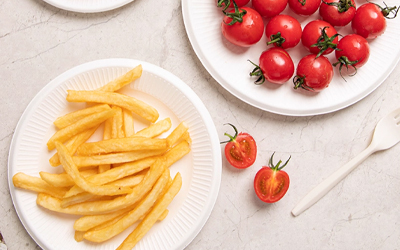


Bagasse is fiber-based and typically accepted in paper/fiber recycling where clean and dry. When food-soiled, many facilities send it to organics or compost streams where permitted. Always align with local waste rules and your hauler.
For enterprise buyers, third-party certifications matter. Warmpack’s facility holds BRCGS Global Standard for Packaging Materials Issue 6 with Grade A, issued November 22, 2024 and valid to January 3, 2026.
Warmpack also maintains FSSC 22000 (ISO 22000:2018 plus ISO/TS 22002-4) with current cycle through December 13, 2025.
These frameworks underpin HACCP-style controls, hygiene, and consistent packaging quality—points procurement teams can document in supplier approval files.

6–7 inch for desserts and sides, 9–10 inch for mains and buffets. Warmpack Bagasse Plates keep stiffness under load, so servers can carry confidently.
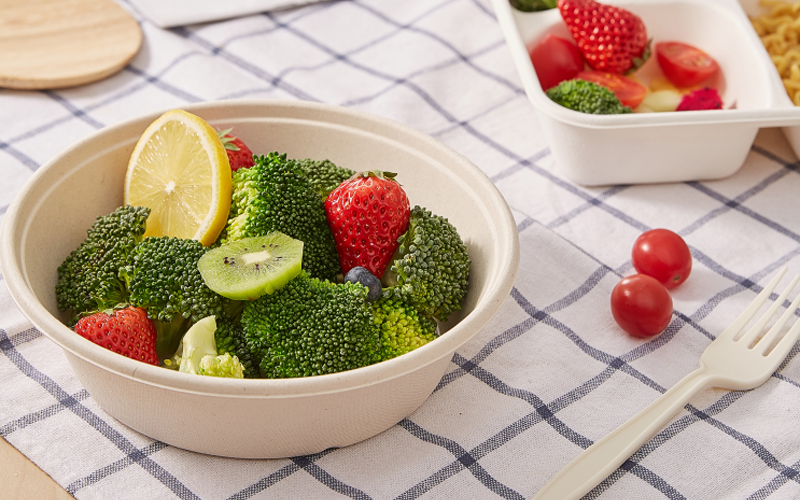
Taller walls limit splash; fiber texture reduces slip with dressings and broths.

One-piece hinges speed assembly. Divided clamshells help portion control and prevent sauce migration.

Compartment trays organize multi-item meals for schools, events, and inflight catering.

Bagasse cups with matching fiber lids offer a plastic-light alternative for sides, rice, and small soups.

Molded-fiber cutlery brings a uniform brand look across disposables.
Bagasse maintains structure with hot entrées and microwaving for brief reheat cycles. For ovens, verify vendor specs; fiber darkening can occur at higher temperatures over time.
Aqueous and oil resistance meet typical QSR demands; for long hold times with very oily dishes, consider lining papers or pairing with tighter-seal lids.
Nesting ratios reduce back-of-house space. Clamshell locks minimize pop-open risk in delivery bags.
Start with a lean matrix: 6/9/10-inch plates, a 650–1000 ml bowl, 1-div and 3-div clamshells, one tray, and matching lids. This covers 80% of banquet and QSR menus.
Balance warehouse space and handling: higher counts cut freight per unit, but check line-pull ergonomics and shelf heights to prevent crushed corners.
Pilot two weeks by menu segment, train staff on lid-fit and heat limits, update POS buttons and BOH cheat sheets, and place clear “fiber only” bins front-of-house.
Warmpack manufactures to international packaging and food-safety standards with documented scopes for pulping, molding, drying, and die-cutting—useful when qualifying alternates across multi-site operations.
The matte, off-white look reads “minimal and modern,” pairing well with cafés and boutique hotels.
Subtle logo emboss or one-color branding preserves the eco-cue while improving recall on social posts and delivery unboxings.
Warmpack aligns molded-fiber engineering with audited quality systems recognized worldwide. BRCGS Packaging Materials Grade A and FSSC 22000 provide the compliance backbone large buyers require, while product tooling covers the core hospitality sizes and forms used daily.
A: Short microwave reheats are generally fine. Avoid prolonged or oven-level heating, and always confirm item-specific guidance from your supplier.
A: Not always. Use the “right material, right job” approach: molded fiber for hot, heavy, or saucy foods; keep specialty plastics where a hermetic seal or long hot hold is non-negotiable.
A: Properly made bagasse resists soak-through for typical hold and delivery windows. Pair with liners or faster service for very oily items.
A: Look for BRCGS Packaging Materials and FSSC 22000 from reputable bodies such as LRQA. Keep valid copies on file for audits.
A: Compost rules vary. In some regions, food-soiled fiber goes to organics streams; in others it’s landfill or energy recovery. Confirm with your local hauler.
A: Choose a lock style tested with your menu, avoid overfilling, and keep hot lids vented to reduce steam pressure.
A: Yes. Embossing or single-color prints keep the natural aesthetic while boosting brand recall.
A: A tight set—6/9/10-inch plates, 650–1000 ml bowls, 1-div and 3-div clamshells, one tray, and compatible lids—covers the majority of SKUs.
For hospitality teams seeking durability speed and a credible sustainability story bagasse tableware from a certified supplier is a practical upgrade across menus and service models
 |
Custom Packaging |
 |
Give Back Fund |
 |
Compost Connect |

