The Role of Bagasse in the Manufacturing Process

What is Bagasse?
Bagasse is the fibrous byproduct remaining after extracting juice from sugarcane. In the
past, it was often discarded or incinerated, but now manufacturers transform it into
biodegradable packaging that rivals plastic in strength and surpasses it in environmental
performance.
Composition and Physical Properties
Bagasse primarily consists of cellulose, hemicellulose, and lignin. These components give
it high tensile strength and a fibrous structure, making it ideal for molding into various
packaging forms. Compared with traditional wood pulp, bagasse fibers are shorter and
easier to process.
Advantages Over Plastic and Paper Pulp
Biodegradable
Decomposes in 60 to 120 days under natural conditions, while plastic can take centuries.
Microwave and Freezer Safe
Can withstand temperatures up to 200°C and is suitable for refrigeration.
Moisture and Grease Resistant
Properly treated bagasse containers can hold oily or moist food without leaking.
Source and Supply Chain of Sugarcane Fiber

Bagasse oval lunch box

Bagasse trays

Bagasse Bowl
Global Production Regions and Seasonal Cycles
Major producing countries include Brazil, India, Thailand, and China, with long growing seasons and high yields. Peak bagasse production typically occurs between November and April.
Raw Material Procurement Standards for Food Packaging
To ensure hygiene and safety, only food-grade bagasse is used. The raw material collection process is strictly controlled to avoid pesticide residues or fermentation byproducts. Most exporters follow certifications such as:
FDA (USA)
LFGB (Germany)
BRCGS (Global Packaging Standard)
Bagasse Manufacturing Process
Production Line Summary
The entire process from raw bagasse to finished packaging includes six core stages: collection, pulping, molding, drying, trimming, and packaging.

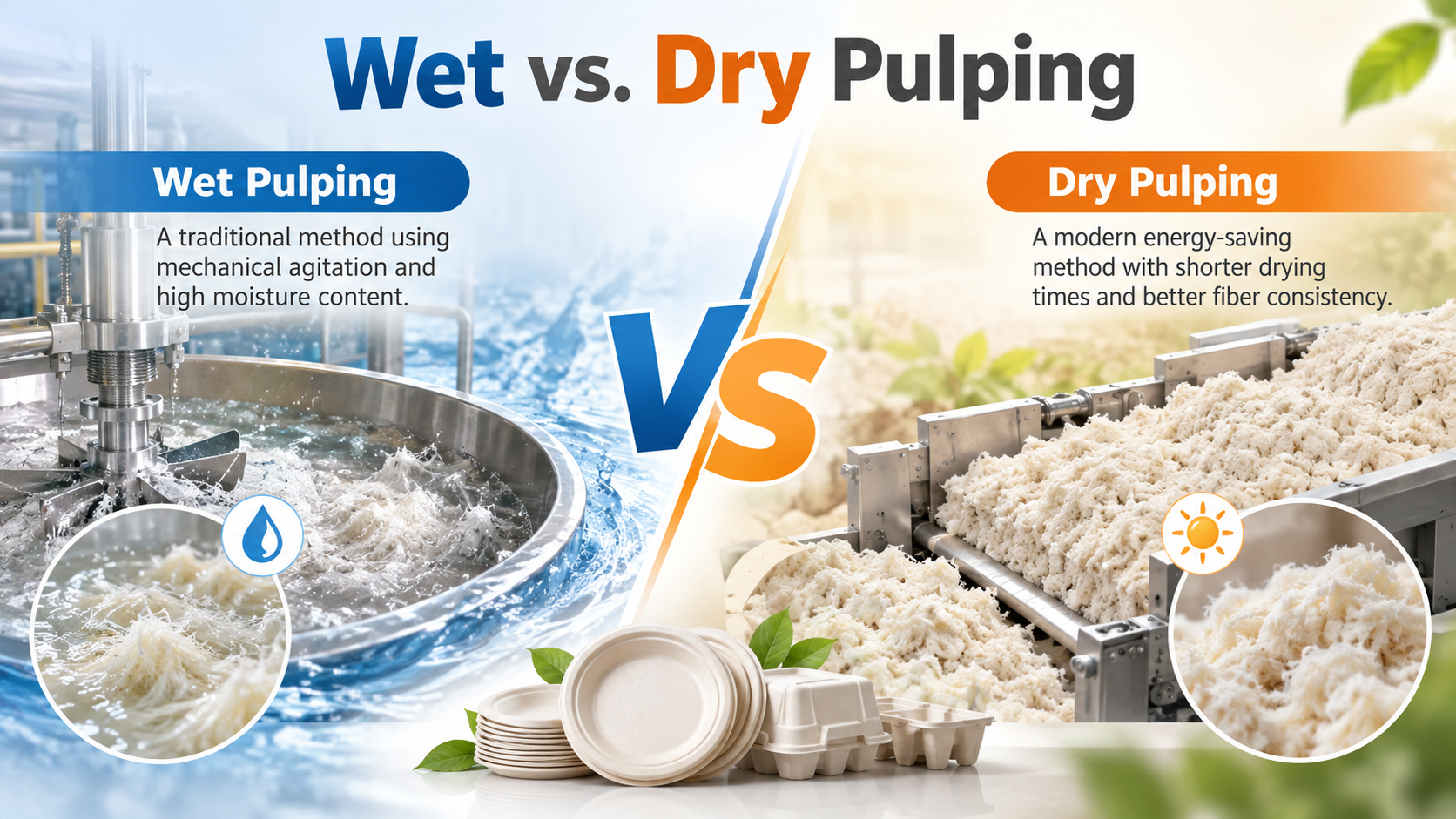
Wet vs. Dry Pulping
Wet Pulping
A traditional method using mechanical agitation and high moisture content.
Dry Pulping
A modern energy-saving method with shorter drying times and better fiber consistency.
Manual vs. Automated Production Lines
Small manufacturers typically use semi-automated processes. Large factories use conveyor systems, molding equipment, and intelligent quality inspection technologies.
Step 1: Raw Material Collection and Pre-Treatment
Collection and Transportation of Bagasse
Sugar mills supply bagasse, which is then transported directly to the manufacturing plant.
Initial Screening and Quality Control
Non-fibrous materials such as bark and dust are removed at this stage to ensure optimal pulping performance.
Storage Conditions
Bagasse should be stored in cool, low-humidity environments to prevent mold and fiber degradation.
Step 2: Cleaning and Pulping
Industrial-Grade Cleaning
High-pressure water sprays and mechanical brushes are used to thoroughly clean the bagasse.
Removal of Impurities and Moisture
Fine mesh screens and centrifuges remove soil, ash, and excess moisture.
Pulp Consistency Adjustment
The cleaned bagasse is pulped into slurry and adjusted to the ideal consistency for molding.
Step 3: Molding and Thermoforming
Mold Design and Fabrication
CNC equipment is used to create high-precision molds suitable for products like plates, boxes, and trays.
Hot vs. Cold Pressing
Hot pressing is more common, aiding in fiber bonding and accelerating the forming process.
Key Temperature and Pressure Parameters
Typical hot pressing temperatures range from 160–200°C, with pressures between 40–90 PSI to ensure dense shaping.
Step 4: Drying and Dehydration
Industrial Drying Systems
Formed products are dehydrated using high-efficiency drying equipment.
Humidity and Deformation Control
Sensors monitor moisture levels in real-time to prevent shrinkage or warping.
Impact on Structural Integrity
Drying quality directly determines the final rigidity and service life of the product.
Step 5: Trimming and Final Shaping
CNC Trimming, Embossing, and Manual Refinement
Each product undergoes trimming and may be embossed with brand logos or textures.
Export-Grade Precision Standards
Export packaging must meet strict dimensional and surface quality standards.
Defect Handling and Reprocessing
Rejected products are not reused. All approved products are made from fresh raw materials.
Step 6: Quality Control and Compliance
Inline and Final Inspection
Random sampling tests leakage resistance, shape retention, and surface quality.
Food Contact Standards (FDA, LFGB, ISO 22000)
Ensures the packaging does not release harmful substances or alter food taste.
Appearance, Leak, and Durability Testing
Tests include checking for cracks, color consistency, dimensional accuracy, and load-bearing capacity.
Step 7: Packaging, Storage, and Logistics
Sustainable Inner and Outer Packaging
Products are wrapped with biodegradable film and placed into cardboard cartons.
Storage Humidity and Pest Control
Finished goods are stored in environments with 50–60% relative humidity and undergo regular pest control.
Wholesale and Retail Packaging Options
Custom branding, printed cartons, and pallet shipping options are available.
Challenges and Technological Innovations
High-Speed Precision Molding
Servo-driven presses enable fast and precise forming.
AI and IoT in Quality Inspection
Smart cameras and AI models can detect product defects in real-time.
Energy-Saving Smart Drying Systems
Infrared and microwave drying technologies reduce energy consumption and improve productivity.
Conclusion: Shaping the Future of Sustainable Packaging
Bagasse packaging brings together agriculture, engineering, and environmental responsibility. With ongoing technological advancement, it is not just a green alternative to plastic, but a future-forward solution for disposable food packaging. From high-tech factories to the takeaway box in your hand, every step proves that waste can be beautifully reinvented.