Updated: October 22, 2026
A Practical Guide to 6, 7, 9 and 10-Inch Sugarcane Plates for Foodservice and Wholesale Buyers
Choose by Portion and Service, Not the Inch Label Alone
Which bagasse plate size should you choose for a restaurant, catering event or wholesale foodservice program?
The short answer is to start with the meal and portion size, compare the usable serving area, check whether compartments are needed, and then confirm the exact SKU and carton packing.
A 6-inch plate may be a reasonable candidate for desserts and side dishes. A 9-inch plate is often considered for main meals, while a 10-inch option provides a larger nominal format for more substantial portions. Three-compartment designs are worth comparing when a menu contains several components that should be served separately.
But these are starting points, not guaranteed menu matches.
Two plates sharing the same nominal size can have different actual diameters, depths and usable serving surfaces. Their packing quantities may also differ.
For buyers planning repeated wholesale orders, the correct decision needs to connect three things: the food being served, the physical product and the approved packing specification.
Why Nominal Diameter Is Only a Starting Point
A plate described as “10 inch” is not necessarily exactly 254mm in outside diameter.
Nominal inch descriptions often function as product categories, while manufacturing specifications identify the actual measured dimensions.
For example, the published Warmpack references P014 and P007 are both categorized as 10-inch plates, but their listed diameters are 261mm and 258mm respectively.
That difference matters when comparing plate families, retail packaging, storage space and service equipment.
It also explains why buyers should never replace a product drawing with a nominal size label.
Before choosing from Warmpack bagasse plate models, confirm the relevant SKU, dimension measurement points and approved specification.
Compare Six Warmpack Bagasse Plate Models
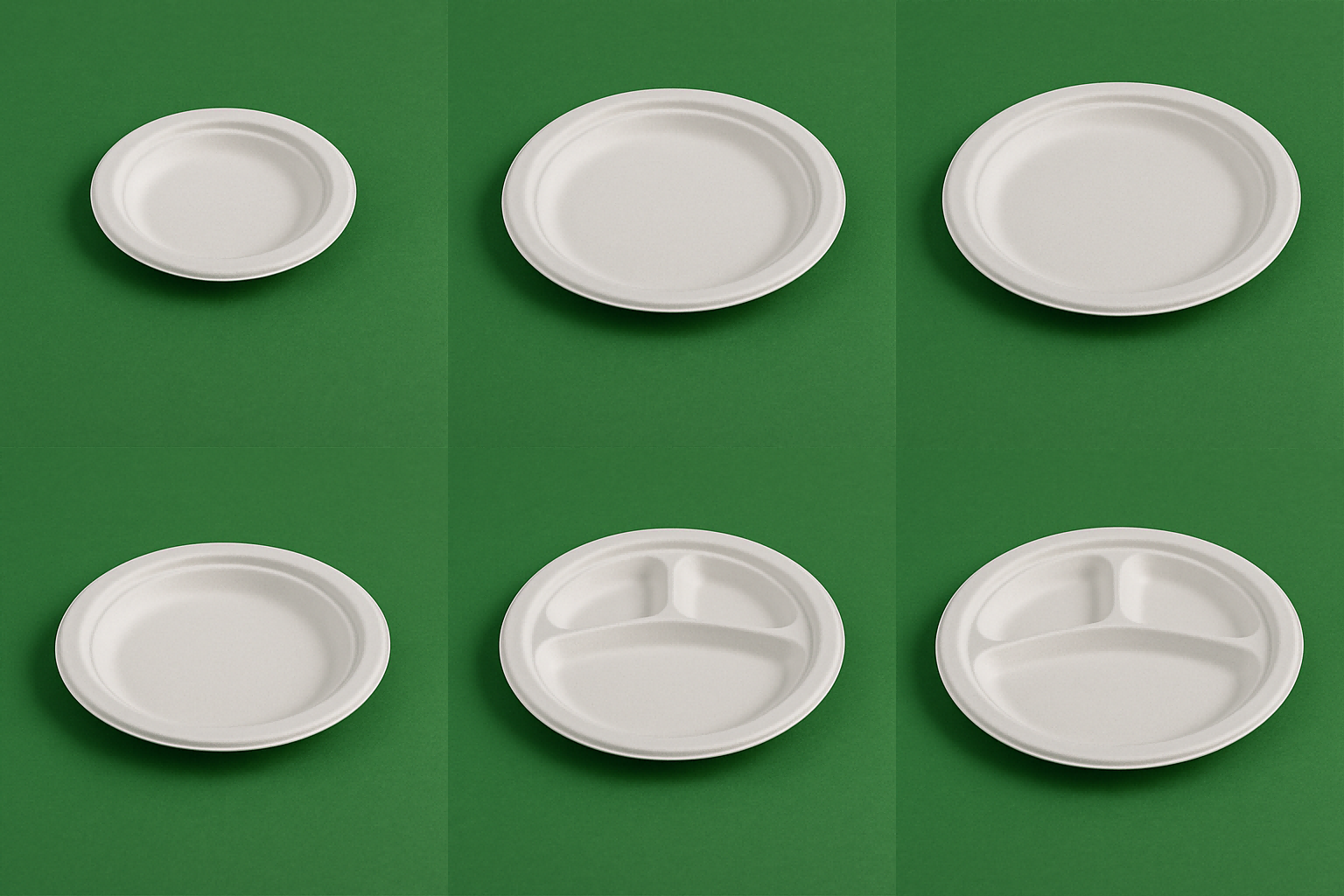
Warmpack's existing size guide identifies six plate references covering standard round and three-compartment designs.
The following information reproduces the published reference specifications, not a newly verified production quotation. Current availability, dimensions, tolerances and final packing should be confirmed before order approval.
Published Plate Sizes and Carton Packing
| Nominal Size | Model | Published Dimensions (mm) | Pieces/Bag | Pieces/Carton | Carton Size (cm) |
| 6 inch | P012 | φ155×15 | 50 | 1,000 | 32×29.5×32 |
| 7 inch | MM-4 | φ175×15 | 50 | 1,000 | 35×28×36.2 |
| 9 inch | P013 | φ225×20 | 125 | 500 | 46×29×24 |
| 9 inch, 3-compartment | P006 | φ225×20 | 125 | 500 | 46×31×24 |
| 10 inch | P014 | φ261×23 | 50 | 500 | 53×31.5×27.5 |
| 10 inch, 3-compartment | P007 | φ258×23 | 50 | 500 | 53×33×27.5 |
Source: Warmpack's existing published plate-size guide, reviewed October 22, 2026. Dimensions and packing are reference information and require confirmation against current approved SKU specifications.
6 and 7-Inch Plates for Smaller Portions
The 6-inch P012 and 7-inch MM-4 provide two starting points for smaller food portions.
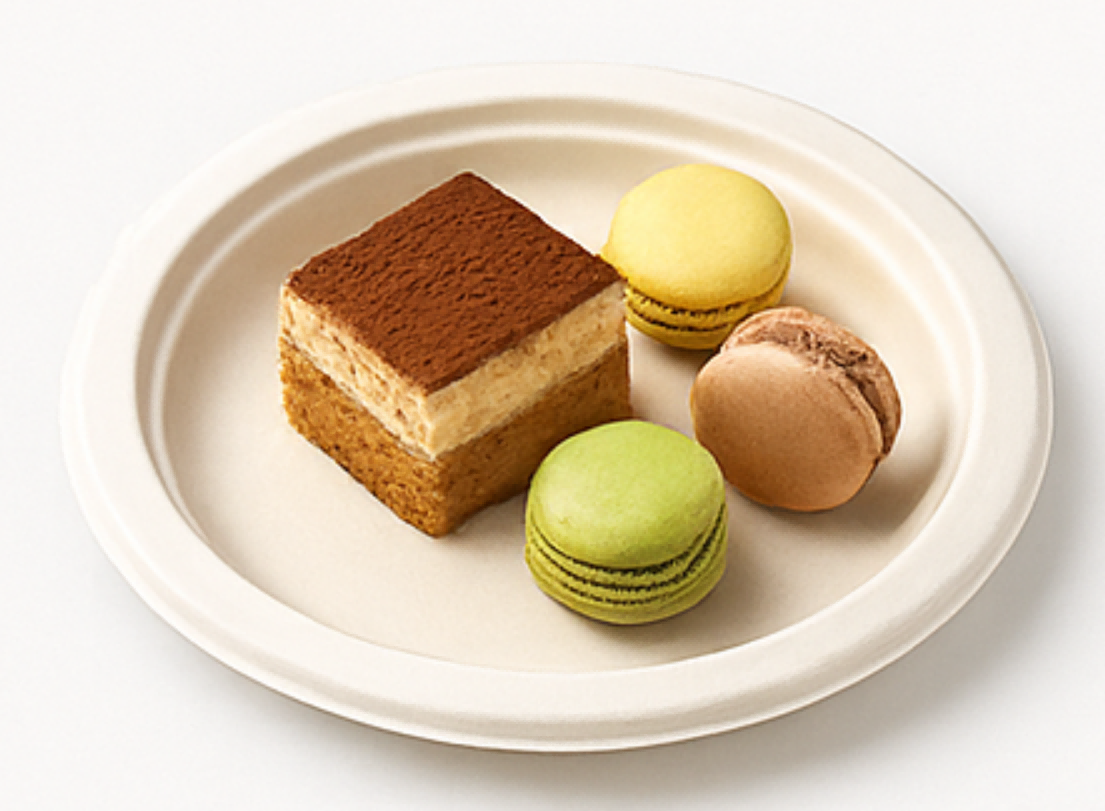
For bakeries, cafés and catered events, the 6-inch category may be suitable for evaluating cakes, cookies, pastries and small appetizers.
The 7-inch category offers additional nominal space and may be considered for side dishes, snacks and selected smaller meals.
However, neither size should be selected solely from photographs.
A tall dessert, wide pastry or heavily garnished appetizer may need more space than expected. Measure the food's actual footprint and check how much usable area remains inside the rim.
Also consider whether guests will carry the plate while standing or place it on a table.
![P012 6-inch round bagasse plate]()
P012 — 6-inch round plate
![MM-4 7-inch round bagasse plate]()
MM-4 — 7-inch round plate
9-Inch Plates for Main Meals
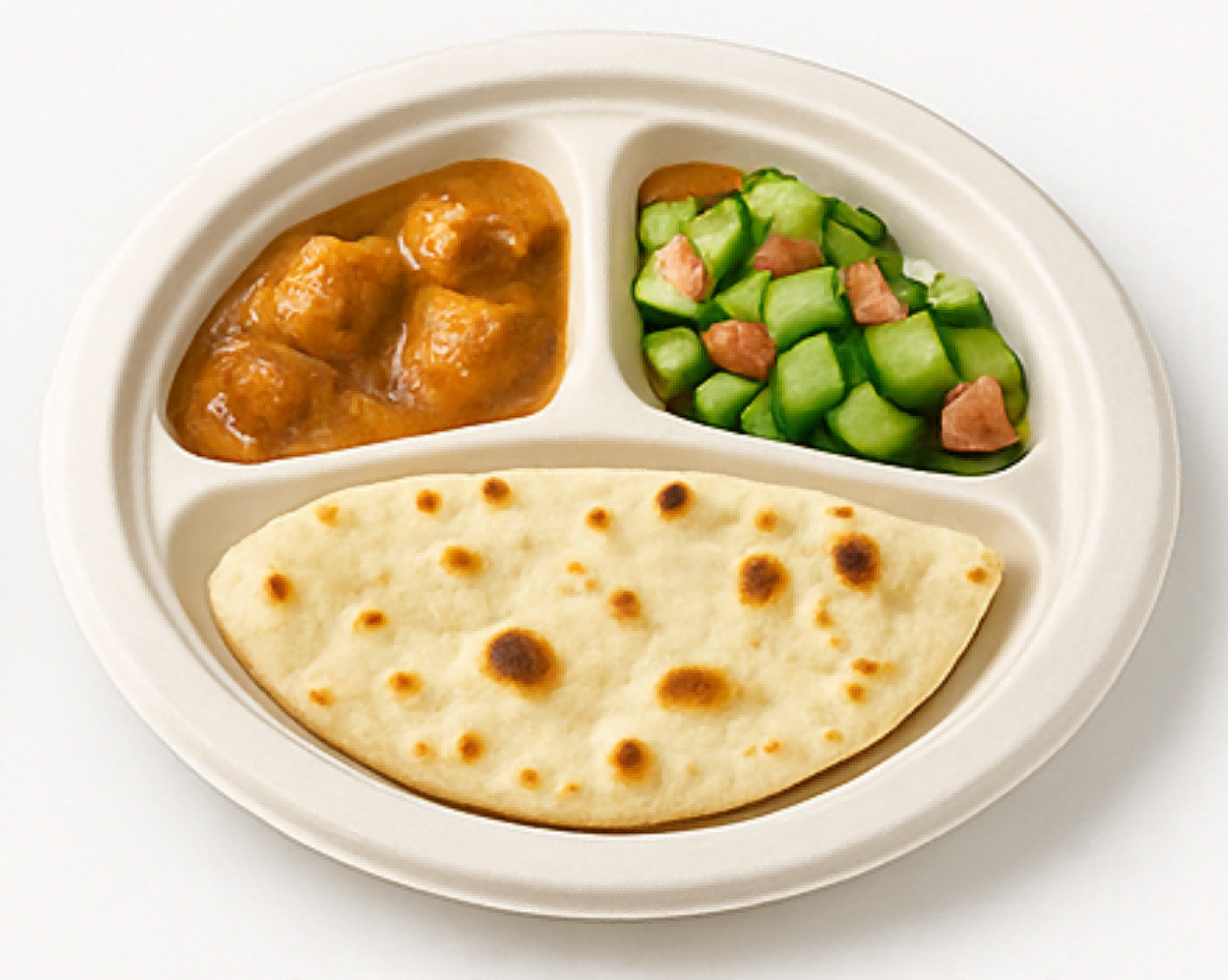
The 9-inch category includes P013, a standard round format, and P006, a three-compartment version.
Both are published with a nominal dimension of φ225*20mm, although their layouts are different.
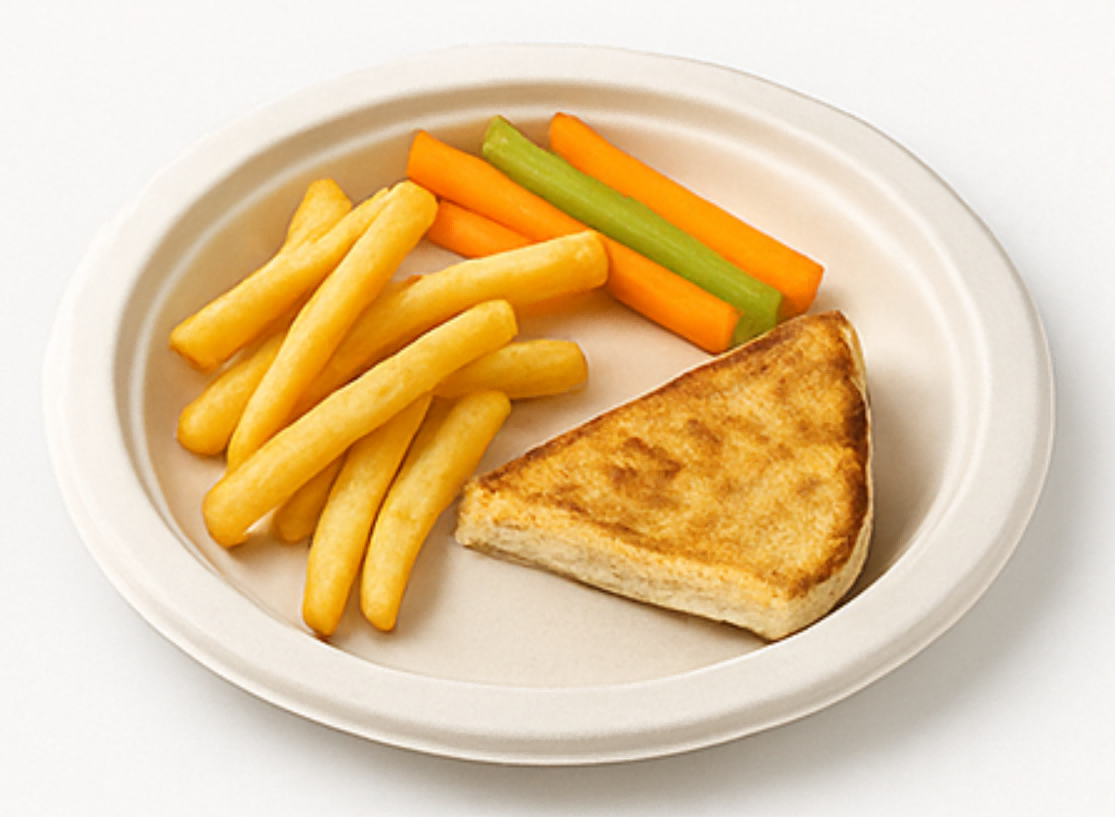
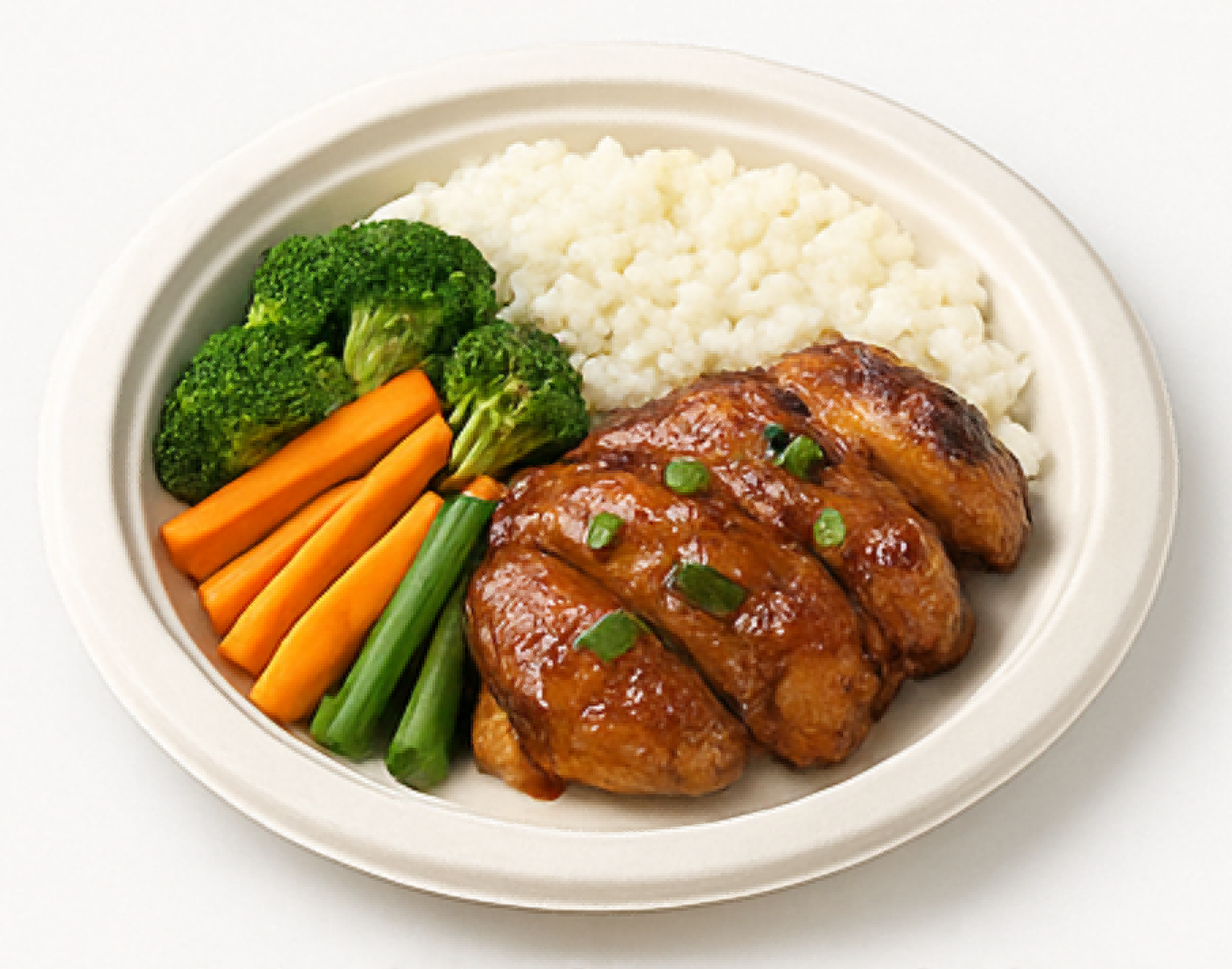
A round plate may be considered for meals served together, such as pasta, rice dishes or a protein with vegetables.
A compartment design may help organize a meal into separate serving areas.
For institutional foodservice, the difference can affect portion planning and the speed at which staff assemble meals.
Test the actual dish combination before selecting the layout. A menu that fits a round plate may not distribute comfortably across three compartments.
![P013 9-inch round bagasse plate]()
P013 — 9-inch round plate
![P006 9-inch three-compartment bagasse plate]()
P006 — 9-inch three-compartment plate
10-Inch Plates for Larger Portions
The 10-inch category includes the round P014 and three-compartment P007.
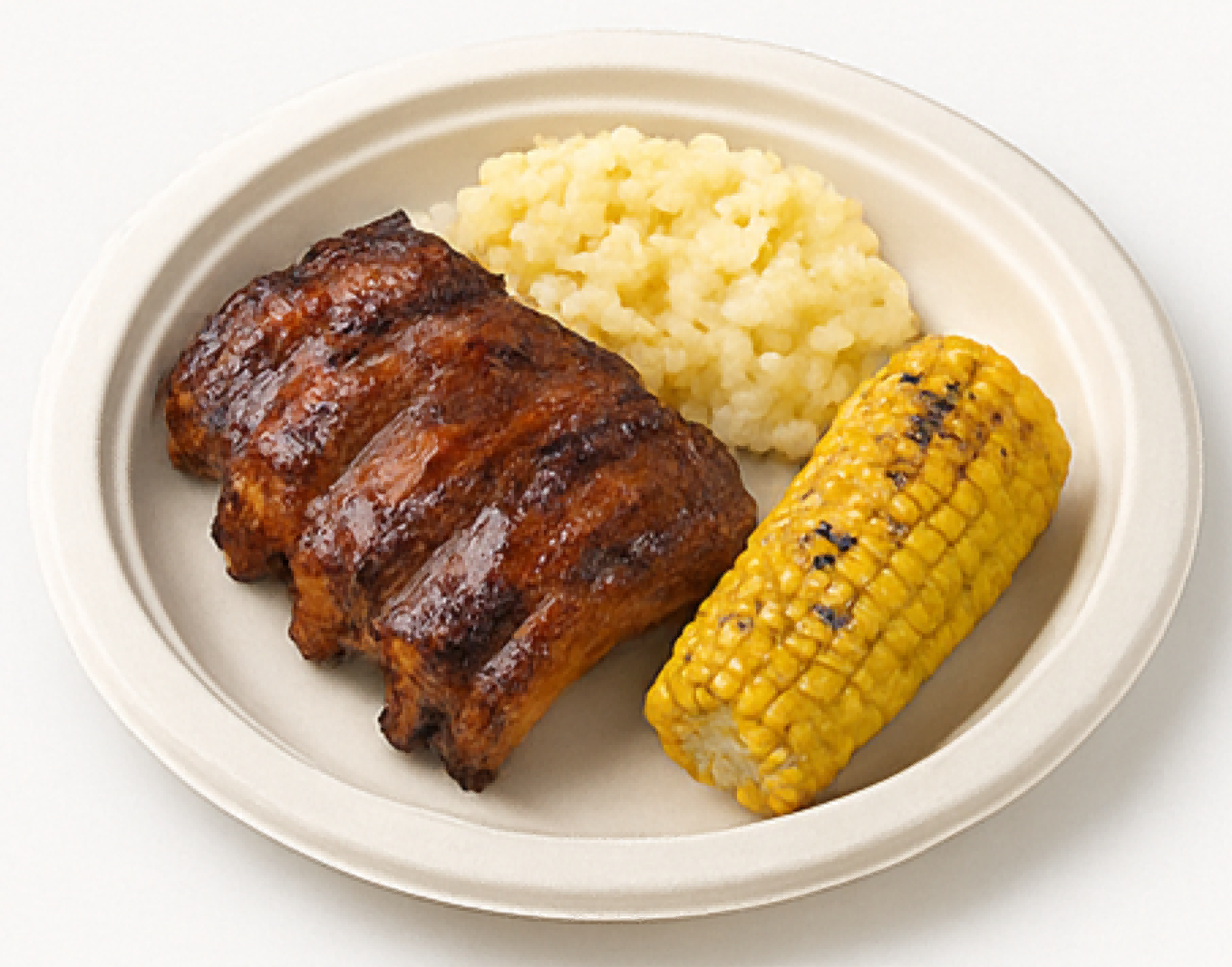
These are useful candidates for evaluating larger meals, buffets and multi-item service.
But remember that the published diameters differ: P014 is listed as 261mm and P007 as 258mm.
Their carton dimensions also differ.
Buyers should confirm both the product drawing and intended packing arrangement before treating these models as alternatives.
A larger outside diameter does not automatically mean better value. It may increase serving flexibility, but it can also affect packing, storage and the amount of unused plate area for smaller meals.
![P014 10-inch round bagasse plate]()
P014 — 10-inch round plate
![P007 10-inch three-compartment bagasse plate]()
P007 — 10-inch three-compartment plate
Round or Compartment Plate?
The choice between a standard round plate and a three-compartment plate should follow the actual menu.
A compartmented plate is not automatically better simply because it has more sections. Sometimes a larger uninterrupted serving area is more useful.
When an Open Round Plate Makes Sense
A regular round plate offers an uninterrupted surface for arranging food.
This can be useful for bakery items, plated lunches, grilled food and meals that do not require strict separation between components.
It also provides flexibility when portions change between service periods.
For example, the same general round-plate format might be considered for both a rice meal and a pasta dish, provided the specific plate performs adequately in each application.
However, wet sauces, high food loads and cutting requirements should still be tested with the real menu.
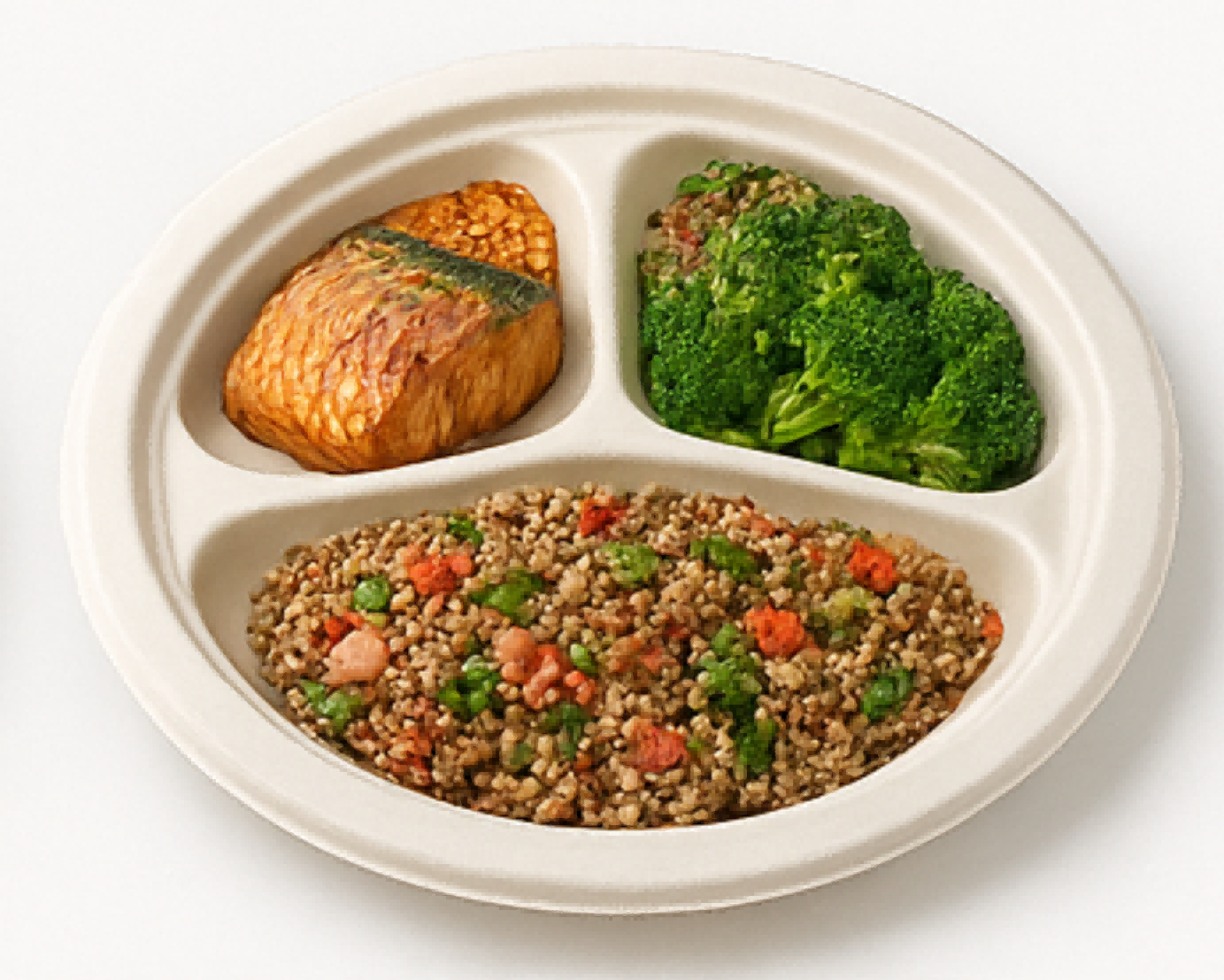
When Three Compartments Are Useful
Three-compartment plates provide designated serving areas that can assist portion organization.
This may be useful for schools, corporate cafeterias, meal programs and catered combination meals.
A typical meal might include rice, vegetables and a protein dish.
But compartment boundaries do not automatically guarantee that sauces will never spread between sections.
Buyers should check the usable area of each compartment, the depth of the dividers and the plate's performance when carried.
When catering or event requirements are more complex, Warmpack's compostable plates for catering and events guide provides a broader service-based comparison.
Check the Usable Serving Area and Handling
Test Real Portions, Not Empty Plates
The plate's outside diameter is not the same as its usable serving area.
The rim, curved sides, recessed center and compartment walls all influence how much food can be arranged comfortably.
Rather than estimating capacity from diameter alone, place a normal serving on the candidate plate.
Check how the food sits inside the rim and whether the plate remains balanced.
For buffet use, test the heaviest normal portion. For plated meals, check whether the food can be cut without excessive movement or deformation.
Repeat the assessment using the actual utensils and serving process.
Warmpack's sample testing guide for bagasse food containers can help organize these evaluations.
Check Rim Strength and One-Hand Carrying
How the plate will be held is just as important as what it contains.
At a buffet, guests may hold a plate in one hand while using the other to serve food.
A cafeteria worker may handle multiple plates during distribution. A delivery operation may stack or transport packed meals.
Evaluate whether the rim remains stable, whether the base bends excessively and whether stacked plates separate easily.
Observe the product under realistic service conditions. Do not rely on a general claim that every bagasse plate is strong, leakproof or resistant to warping.
Plate Selection by Meal and Service Type
| Meal or Service | What to Compare | Sample Check | Information for RFQ |
| Dessert or side dish | Food footprint, rim clearance, plate size | Place actual pastries or side portions on 6/7-inch candidates | Menu, portions, model preference |
| Full main meal | Serving area, load distribution, rigidity | Test a normally filled 9/10-inch candidate | Portion, plate model, service method |
| Combination meal with sauces | Compartment area, divider shape, moisture conditions | Fill each section and check handling or movement | Food components, preferred layout |
| Standing buffet or event | One-hand carrying, rim stability, stacking | Simulate service with actual cutlery and portions | Guest count, service format, packing requirement |
These suggested applications are selection examples, not confirmed performance approvals for every model.
Confirm Carton Packing Before Comparing Wholesale Orders
For B2B purchasing, plate size is only part of the calculation.
The quantity inside each bag, the number of pieces per carton and the outer carton dimensions can affect warehouse operations, freight planning and order economics.
Pieces per Bag vs Pieces per Carton
Consider the published packing information.
P012 and MM-4 are listed with 50 pieces per bag and 1,000 pieces per carton.
P013 and P006 are listed with 125 pieces per bag and 500 pieces per carton.
P014 and P007 are listed with 50 pieces per bag and 500 pieces per carton.
These are different packing configurations even when the plate categories appear similar.
For example, a distributor selling individual retail packs should distinguish the inner bag count from the master-carton count.
A caterer buying by the carton may care more about the number of events or meals covered by each case.
When requesting a quotation, state whether your quantity refers to individual plates, inner bags, master cartons or retail packs.
Match Carton Dimensions to Your Order
Carton dimensions influence storage, pallet arrangements and mixed-container planning.
But published packing information may change with the packaging version, custom retail presentation or other order-specific requirements.
Before finalizing freight assumptions, confirm the current carton dimensions, gross weight, case pack and loading arrangement.
A nominal 10-inch plate should not automatically be assigned the same carton data as another 10-inch SKU.
For larger orders, Warmpack's carton CBM and mixed-SKU container loading guide explains how buyers can compare carton volume, case quantities and shipping configurations.
The final purchase order should identify the agreed SKU and packing specification—not just the product category.
Verify Performance and Document Scope
Heat, Moisture and Food-Contact Conditions
Sugarcane fiber provides the main material basis of a bagasse plate, but its presence alone does not establish every finished-product characteristic.
Hot food, oily sauces, acidic ingredients and extended contact may place different demands on the plate.
A product that works well for a dry appetizer may need additional evaluation before being used with a hot, saucy meal.
Likewise, microwave or freezer suitability should only be claimed where the specific finished product has appropriate supporting information.
For EU-bound orders, the food-contact documents for bagasse packaging guide explains how buyers can connect an SKU, material construction and intended use to relevant evidence.
Factory management certifications, food-contact documentation and compostability certificates serve different purposes. They should not be presented as interchangeable evidence.
Compostability and Local Acceptance
Bagasse is a sugarcane-derived fiber, but that doesn't mean every finished plate decomposes within one universal period under all conditions.
Relevant compostability claims depend on the product's construction, applicable evidence and intended processing conditions.
Collection and processing are separate questions.
The U.S. EPA advises buyers to check that a local commercial composting program accepts the specific foodservice products being purchased and that suitable hauling arrangements are available.
US EPA
For practical guidance on identifying a suitable processing route, read Warmpack's commercial composting acceptance guide.
Avoid making a fixed degradation-time promise or stating that every composting facility accepts the plate without product-specific and location-specific support.
Buyer FAQs
1. Which Bagasse Plate Size Should I Choose for a Full Meal?
A 9-inch or 10-inch format is a useful starting point for evaluating many main meals. The final choice depends on portion size, food shape, usable serving area and service method. Test actual portions rather than assuming every full meal fits one nominal diameter.
2. Does a 10-Inch Label Mean Every Plate Has the Same Diameter?
No. A nominal 10-inch label does not replace an actual product specification. Warmpack's published P014 and P007 models have different listed diameters. Confirm the current dimensions, measurement locations and relevant tolerances by SKU.
3. Is the Usable Serving Area the Same as the Outside Diameter?
No. A plate's rim, recessed center, depth and compartments influence how much food can be arranged. A larger outside diameter may not translate into a proportionally larger usable surface. Compare actual menu portions on physical samples.
4. Should I Choose a Round or a Compartment Plate?
Choose according to how the meal is assembled and served. Round plates offer flexible presentation, while compartment plates can organize separate food items. Test sauces, portion distribution and carrying conditions before selecting a three-compartment format.
5. Are All Bagasse Plate Sizes Supplied in the Same Carton Quantity?
No. Warmpack's published specifications identify different pieces-per-bag and pieces-per-carton quantities. The actual packing for a purchase should be reconfirmed against the approved SKU, packaging version and quotation.
6. Can the Published Packing Table Be Used as My Final Order Specification?
It should be treated as reference information. Current model availability, product dimensions, packing counts, carton dimensions and any custom requirements must be confirmed in the order-specific specification before purchase approval.
7. Do All Bagasse Plates Have Identical Microwave, Freezing and Compostability Claims?
No universal claim should be assumed. Suitability depends on the finished product, construction and intended conditions. Compostability also requires appropriate product evidence, while actual collection depends on local acceptance. Do not apply one test or degradation period to every SKU.
8. What Should I Send When Requesting Samples or a Quotation?
Provide the target plate model, intended food and portion size, service method, estimated quantity, packing format, destination market and relevant documentation requirements. Ask the supplier to confirm current specifications, sample options, MOQ and lead time for your particular order.
Request Plate Samples and an Order-Specific Specification
The right bagasse plate is the one that matches your menu, service method and purchasing requirements—not simply the largest or lowest-priced option in a catalog.
Start with the published 6, 7, 9 and 10-inch models. Compare actual dimensions, food presentation, compartment layout and carton packing. Then verify your preferred option through product samples and an approved specification.
Warmpack can help buyers review bagasse plate models, discuss available specifications and identify information needed for a wholesale quotation.
Share your preferred model, intended meal, portion size, service method, quantities, packing requirements and destination.
Contact Warmpack to discuss plate samples and your order requirements.
Choose by the meal. Verify the model. Confirm the packing before placing your bulk order.